Spinal Decompression & Back Protocol | Prevent Pro Gear
Defeat back stiffness and load-bearing stress. Prevent Pro Gear offers proven protocols for tactical athletes to recover, prevent injuries, and progress.
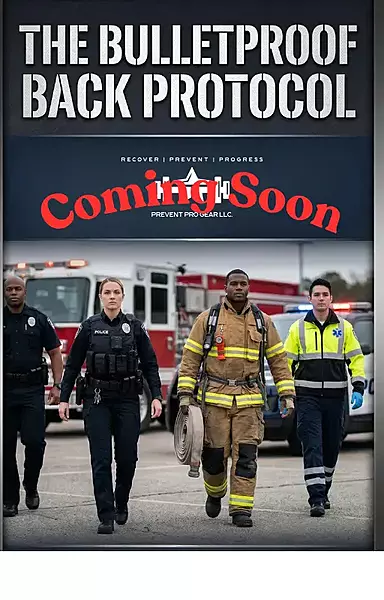
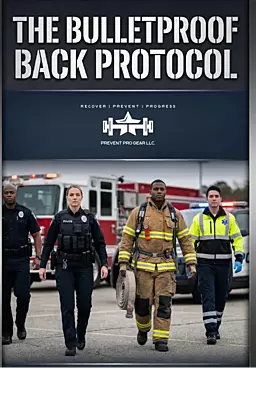
Prevent Pro Gear: The Bulletproof Back Protocol
Recover, Prevent, and Progress for Tactical Athletes and First Responders
Welcome to Prevent Pro Gear, your premier destination for elite active recovery, mobility training, and injury prevention equipment designed specifically for tactical athletes, military personnel, and first responders. If you carry heavy body armor, rucks, or law enforcement duty belts daily, you know the physical toll it takes on your body. Over time, constant load-bearing stress leads to severe compression of the tactical spine, resulting in persistent lower back stiffness, limited range of motion, and chronic discomfort.
Our signature Bulletproof Back Protocol is engineered to reverse this daily wear-and-tear. By simplifying complex spinal anatomy, we target the foundational muscles that absorb the brunt of your gear's weight: the Erector Spinae (the vertical muscles keeping you upright), the Quadratus Lumborum (QL) (the core muscle prone to deep lower-back tightness), and the Deep Six lateral rotators of the hip. Together, these muscle groups form the stabilization system of your lower back and pelvis. When they lock up from load-bearing stress, performance plummets and injury risk spikes.
Through our specialized recovery programs and professional-grade mobility gear, Prevent Pro Gear helps you target these deep stabilizer tissues, decompress your lumbar spine, and rebuild functional movement patterns. Whether you are a police officer walking a beat, a firefighter carrying heavy equipment, or a military professional on long rucks, our protocol provides the essential tools to recover from daily stress, prevent long-term debilitating injuries, and progress your physical readiness.
Frequently Asked Questions
Q: What is "tactical spine" stiffness and what causes it?
A: "Tactical spine" stiffness refers to the chronic compression and fatigue of the lumbar and thoracic spine experienced by tactical professionals (such as police officers, military, firefighters, and EMS). It is primarily caused by carrying uneven, heavy loads for prolonged periods. The constant stress from duty belts, plate carriers, rucks, and personal protective equipment (PPE) forces the spine to overcompensate, locking up supporting core and back muscles.
Q: Why do duty belts and rucks cause lower back pain?
A: Heavy duty belts pull the pelvis forward into an unnatural tilt, while rucks put extreme downward and backward pressure on the shoulders and lower back. This constant load forces the Erector Spinae (back extensors) and the Quadratus Lumborum (QL) (lower back stabilizers) to remain in a state of constant, isometric contraction. Without proper recovery, these muscles tighten, reducing blood flow and leading to chronic lower back spasms, sciatic nerve irritation, and deep stiffness.
Q: What are the Erector Spinae, QL, and Deep Six, and why do they matter?
A: These are the primary muscular targets of our recovery protocol:
- Erector Spinae: A group of muscles running up your spine responsible for keeping you upright under the weight of heavy gear.
- Quadratus Lumborum (QL): A deep lower back muscle that connects your spine to your pelvis. It frequently becomes overactive, tight, and painful from uneven duty belt loads.
- Deep Six: A group of six small muscles deep in the gluteal/hip region that stabilize the pelvis. When these tighten, they restrict hip mobility, forcing your lower back to move excessively and causing injury.
Q: How does the Bulletproof Back Protocol help first responders?
A: The Bulletproof Back Protocol by Prevent Pro Gear is an active recovery and mobility system designed to target, release, and strengthen these specific muscle groups. By combining deep tissue release, targeted stretching, and spinal decompression techniques, the protocol helps first responders restore proper pelvic alignment, release stubborn muscle tension in the QL and glutes, and build a resilient core capable of handling the physical rigors of the job.